
Dry-off marks the end of one lactation, but it’s also a chance to gather information that can improve management in the next. The more you know about each cow before she freshens, the better prepared you’ll be to manage colostrum, fresh-cow protocol, breeding decisions, and future culling.
Johne’s disease and leukosis (BLV) are two diseases that often spread through a herd long before infected cows show clinical signs. By the time a cow appears sick, she may have already exposed other animals or contaminated colostrum and waste milk.
Testing cows before dry-off helps identify infected animals early, giving you time to adjust management before they enter the next lactation. Those results can help determine whether a cow’s colostrum should be fed to calves, identify cows that need special attention after calving, and support future culling decisions.
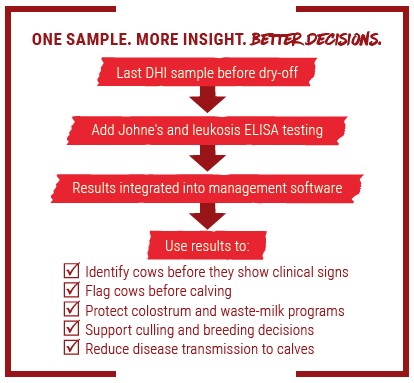
If you use DHI, adding Johne’s or BLV ELISA testing is straightforward. The milk sample is already being collected during your regular test day, so no additional cow handling is required. Your DHI Specialist can coordinate the testing, and results are typically available within five days of the lab receiving the sample. Those results can also be uploaded into herd-management software, including DART, where they become part of the reports you already use.
For producers who are not using DHI, these diagnostic tests are still available. However, incorporating them into a DHI-testing program eliminates the need for separate sample collection while keeping production records and diagnostic results together. Having both in one place makes it easier to identify cows that need additional management before calving.
No two herds manage disease the same way, but every herd benefits from timely information. Whether you’re already testing through DHI or looking for ways to gather more information from your herd, combining production records with diagnostic testing gives you another tool to make informed decisions before the next lactation begins.
Because when it comes to managing your dairy herd, the question is not just what information you have, it’s what information you may be missing. DHI paired with diagnostic testing gives you a more complete picture of your cows and the decisions that can impact their next lactation.
Author: Customer Solutions Advisor Michelle Kaufmann