
Arren Rusch knew his dairy had reached a size that worked for the family, he didn’t want to grow bigger or get caught up managing more people. Instead, he asked a different question: How could they maximize profitability out of the cows they already had? The answer was simple but profitable: focus on milk components.
Using their DHI data to guide breeding, nutrition, and strategic-culling decisions, the 450-cow Holstein and Jersey herd in Pound, Wis., shifted its focus to producing richer milk. The result has added more than $5 per hundredweight in premiums to Class 3 pricing.
Rather than growing cow numbers, D & L Rusch Dairy used its data to pinpoint where improvements could be made, especially in components. The focus on genetics, nutrition, and removing low-component cows has driven steady progress over the past several years.
“Some cows just won’t produce high-component milk,” Arren notes. “But for those that can, it’s amazing to see what they’ll do when fed properly.” Nutrition adjustments, including feeding palm fat and balancing methionine and lysine, helped cows reach new levels.
And while nutrition unlocks potential, genetics guide which cows can truly excel in fat and protein production. Previously, the herd’s genetic selection focused on improving feet, legs, udders, and longevity. Today’s plan includes those traits, but with a big focus on positive fat and protein percent.
With DHI data in hand, Arren began tracking and making breeding decisions to reach their new goal of producing higher-component milk. High-component cows are bred to sexed- or conventional-dairy semen, while lower-performing and lower-component cows are bred to beef and gradually culled.
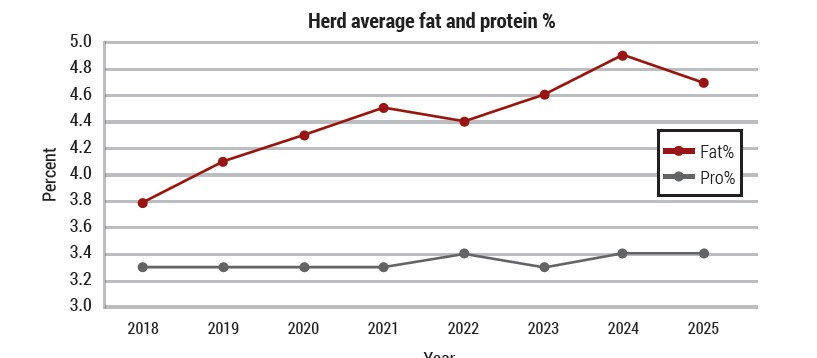
Culling, whether for dairy or beef purposes, became a strategic tool during this time. “It wasn’t drastic, just a few cows a month, but over time, you could really see the bulk tank change,” Arren says. Today, the herd averages 4.7% fat and 3.4% protein, a substantial increase from just five years ago.
The results speak for themselves. Since the change in focus to increased-component production, the premium the dairy gets paid has made a real impact on the milk check. “When we were getting $20 (per hundredweight) for Class 3 Base Price, we were up to $5.50 in premiums,” says Arren. “That’s a game changer on the milk check.”
By pushing fat and protein percentages and using DHI data to make more informed breeding and culling decisions, Arren and his family found a way to increase profitability per cow without increasing herd size.
“DHI testing has been key for us to understand every cow’s potential,” shares Arren. “By looking at individual performance over the years, we can make smarter breeding decisions. With all the data from CentralStar and DART, we can rank cows by energy-corrected milk (ECM) and make informed choices. Every report helps us get better and keeps our herd moving in the right direction.”
Author: Kelly Bristle, CentralStar Director of Member Relations and Promotions